Home Work UX Process About Contact
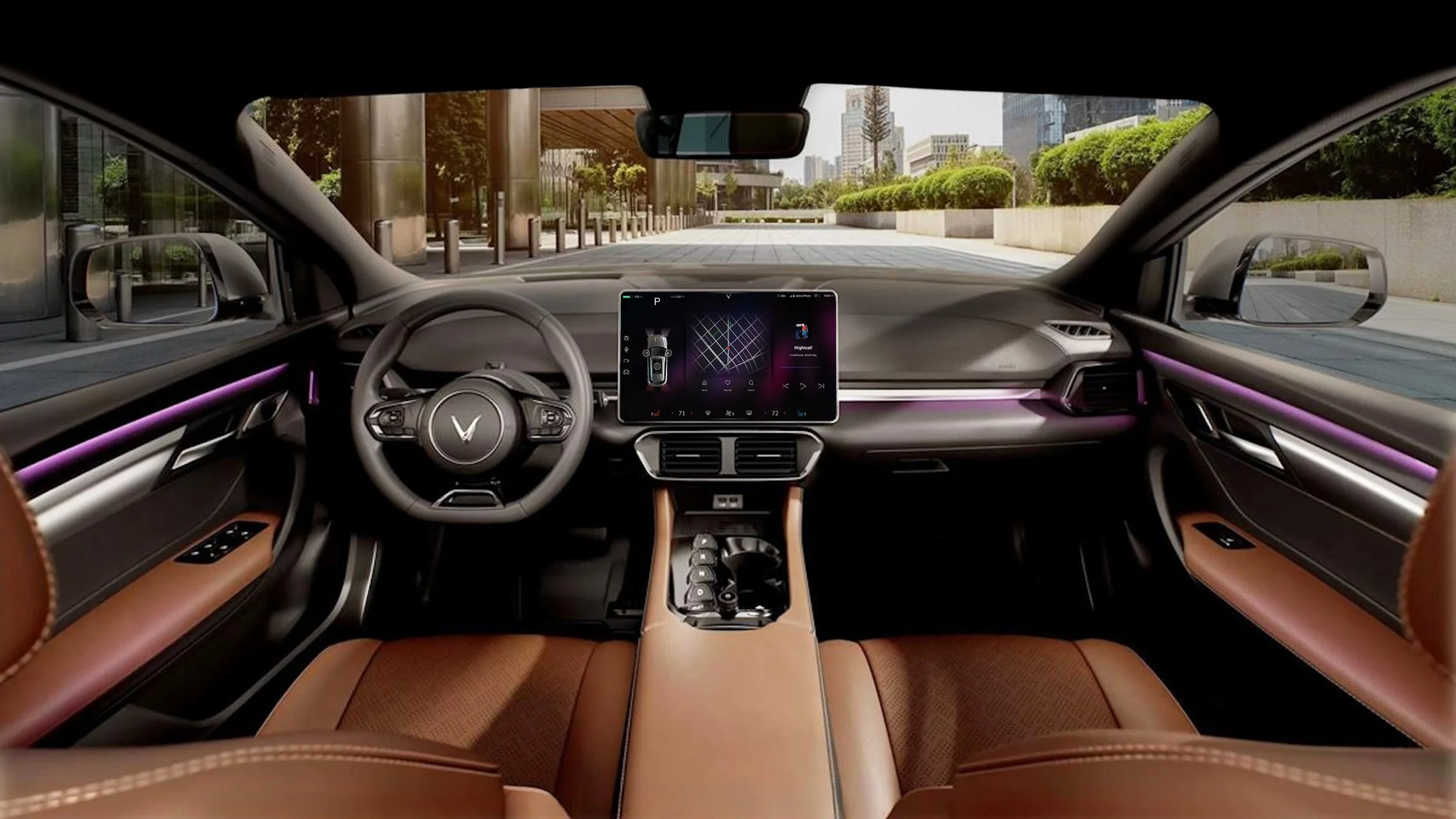
VinFast vehicle interior
Back to All Work

Leading Interaction Architecture for an Electric Vehicle Lineup

Focus: Automotive IVI | Interaction Architecture | Innovation Strategy

Context

Vinfast (Vietnam's first Automotive OEM) is releasing its first flagship electric vehicle. We are tasked with designing its entire IVI (in-vehicle infotainment system) from the ground up.

My Role

  • Define the global interaction model, design the core interactions of the touchscreen: home screen hierarchy, app-switching logic, and the "always-on" persistent controls.
  • Lead the high-level design exploration for the overall IVI system architecture from the ground up.
  • Spearhead scenario development, wireframing, and prototyping for the climate control system, specifically solving for "blind" usability on a touchscreen.

Processes: mindmapping, wireframes, prototypes, animation

Goals & Constraints

  • No Cluster (screen in front of the wheel) and very limited physical buttons.
  • How to control everything from an iPad like screen without compromising safety?
  • Can we outperform established players (like Tesla) by reducing cognitive load for safety critical and routine daily tasks?

Execution

Since the client requested a Tesla-like, "minimal physical button" interface, I prioritized minimizing driver distraction.
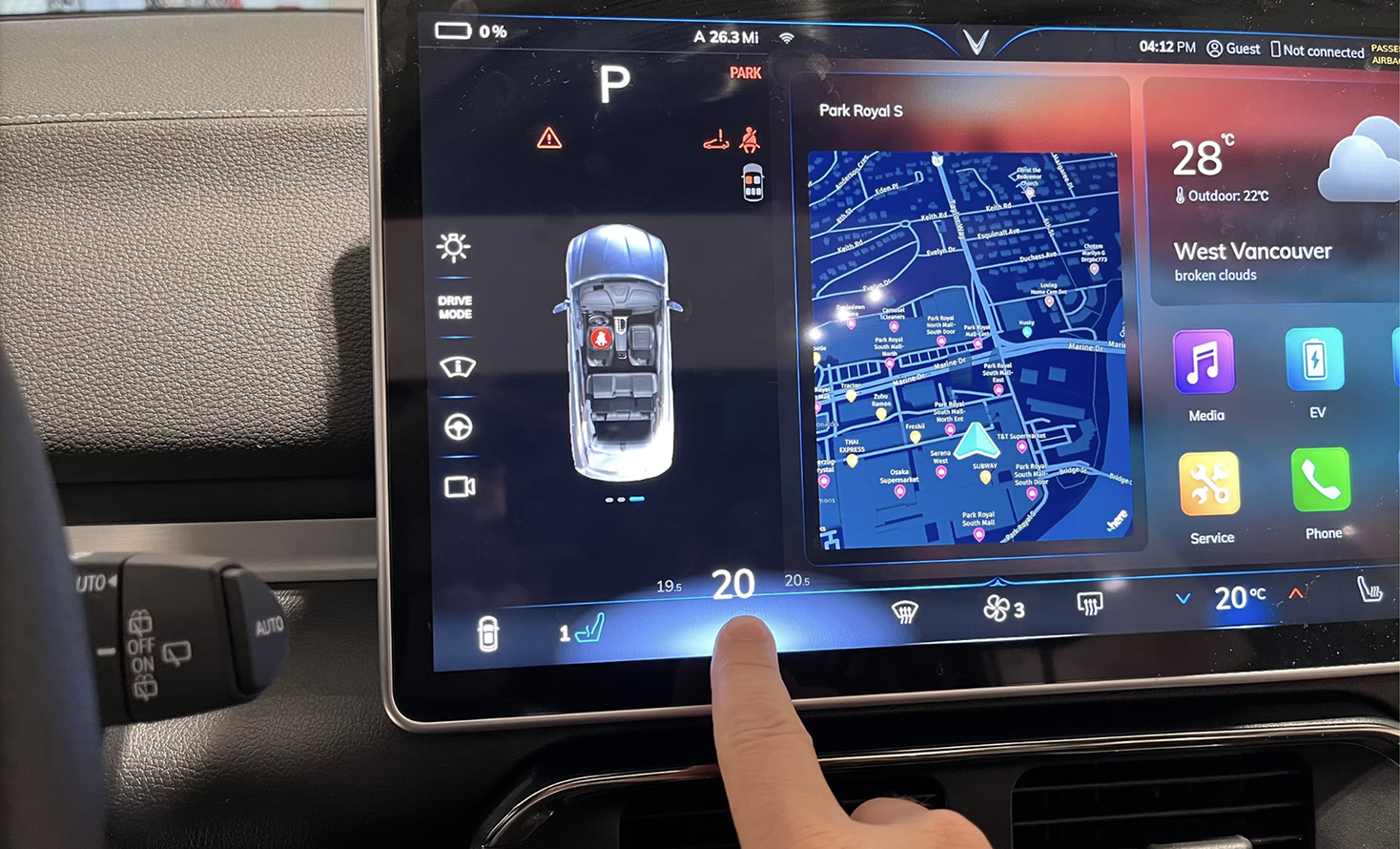
  • Safety-First Architecture: I mapped out high-frequency tasks (Climate, Navigation, Media, Bluetooth) to ensure they were accessible within a single tap from the home screen.
  • Heuristic-Led Design: Operating under tight initial budgets that didn't allow for external testing, I leaned on established automotive UX heuristics and competitive benchmarking to build a defensible V1.
  • Gestural Controls: To solve the challenge of adjusting climate without looking away from the road, I implemented "swipe zones" along the bottom bezel. This allowed users to jump from 0 to 100% fan speed or min-to-max temp with a single fluid swipe, mimicking intuitive mobile interaction language.

Feature Highlights

Digital knob swipe gesture

The "Digital Knob"

When a car has no physical knobs, how do we emulate the tactile speed and accuracy on a touchscreen? I developed a high-velocity swipe model allowing for massive temperature shifts in a single, glanceable action.

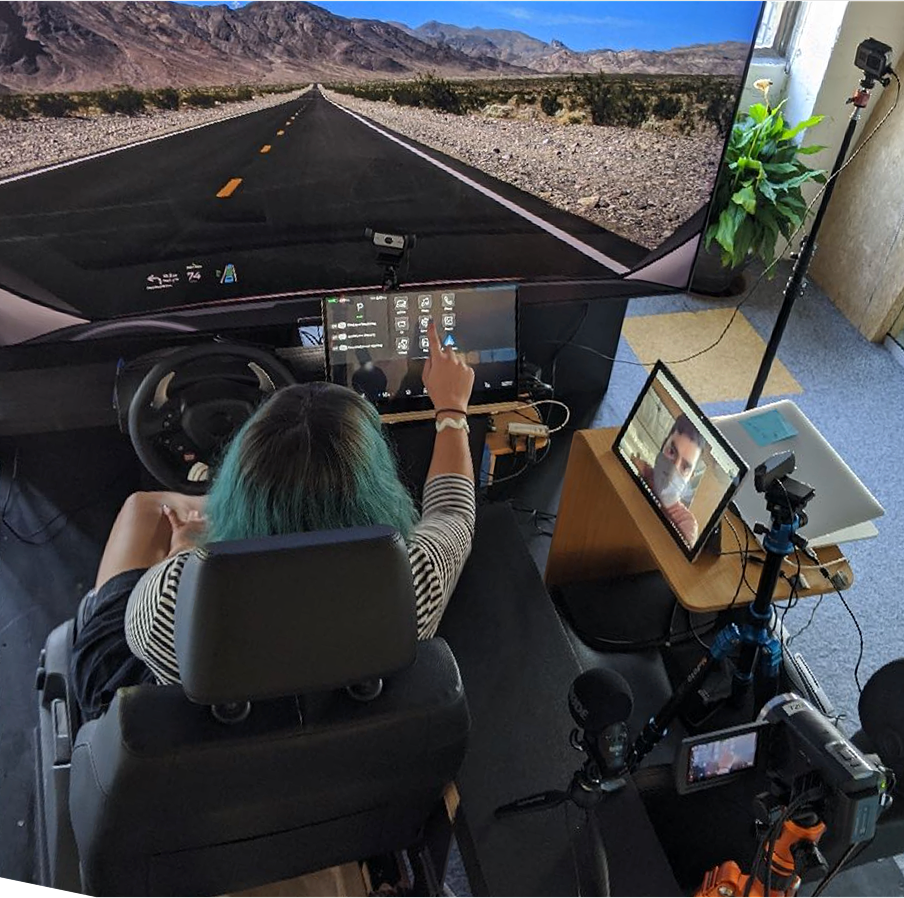
Participants were able to complete the task in 1.2s avg. eye open time with occlusion goggles.
Two-tap Bluetooth switching

Two Tap Bluetooth Switching

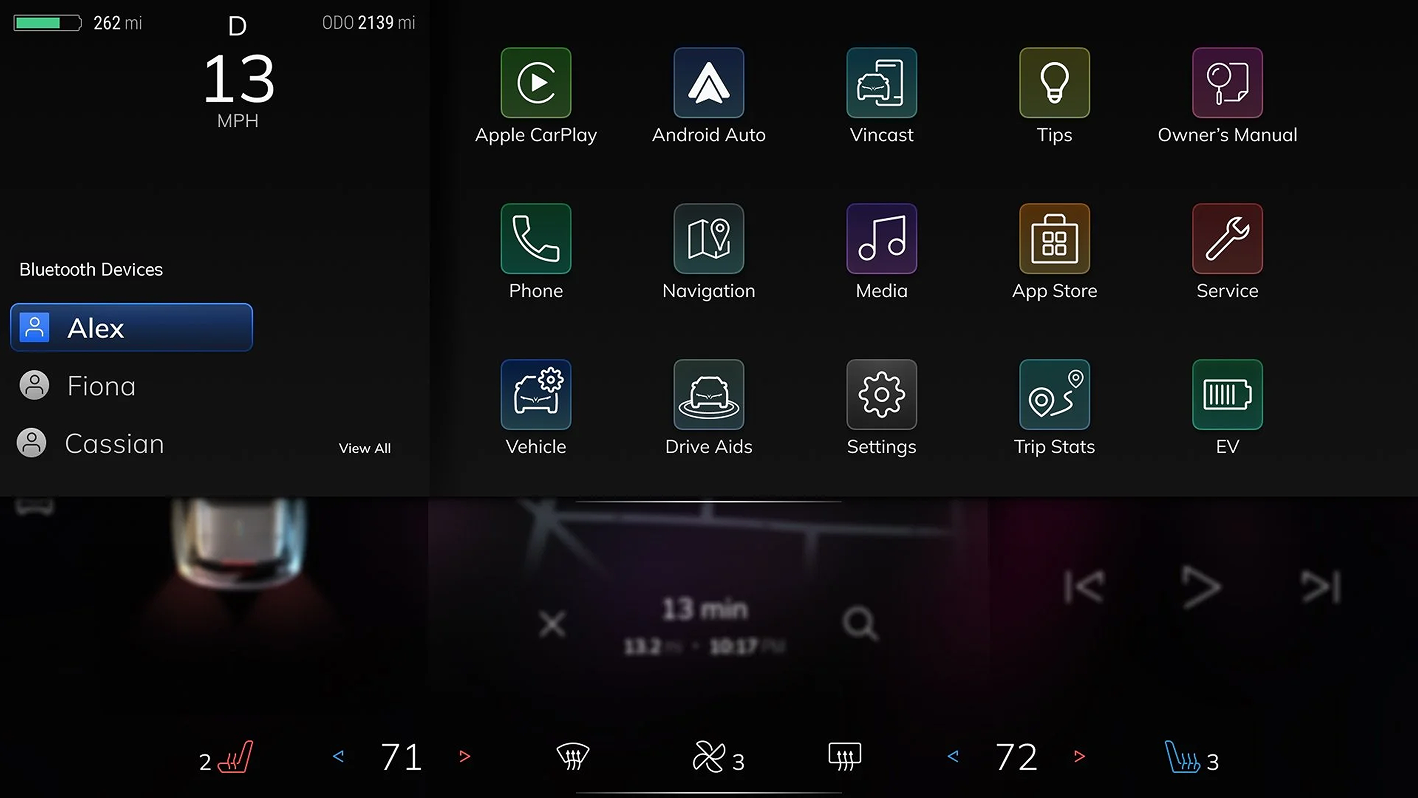
While competitors treat Bluetooth device switching as a secondary "parked" task, we optimized it into a 2-tap flow, recognizing it as a frequent real-world need for families.

Efficiency as Safety: Identifying "edge case" workflows that are actually daily habits.
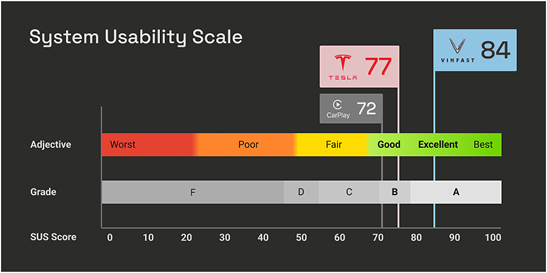
The Results

SUS scores
  • SUS Scores ahead of Tesla: In head-to-head A/B testing, our system delivered higher usability scores than Tesla, even among existing Tesla owners.
  • Regulatory Plus: Moved beyond "checkbox compliance" to create a system that felt intuitive rather than restrictive.
Occlusion goggle testing

Cognitive Load & Occlusion: All designs were vetted through occlusion goggle testing to ensure secondary tasks did not interfere with the primary task of driving.

Next Case Study

Wind River Suite: Unifying Notifications

Architecting a centralized notification framework for a mission-critical DevSecOps ecosystem