"Start with the user experience and work backwards to the technology."
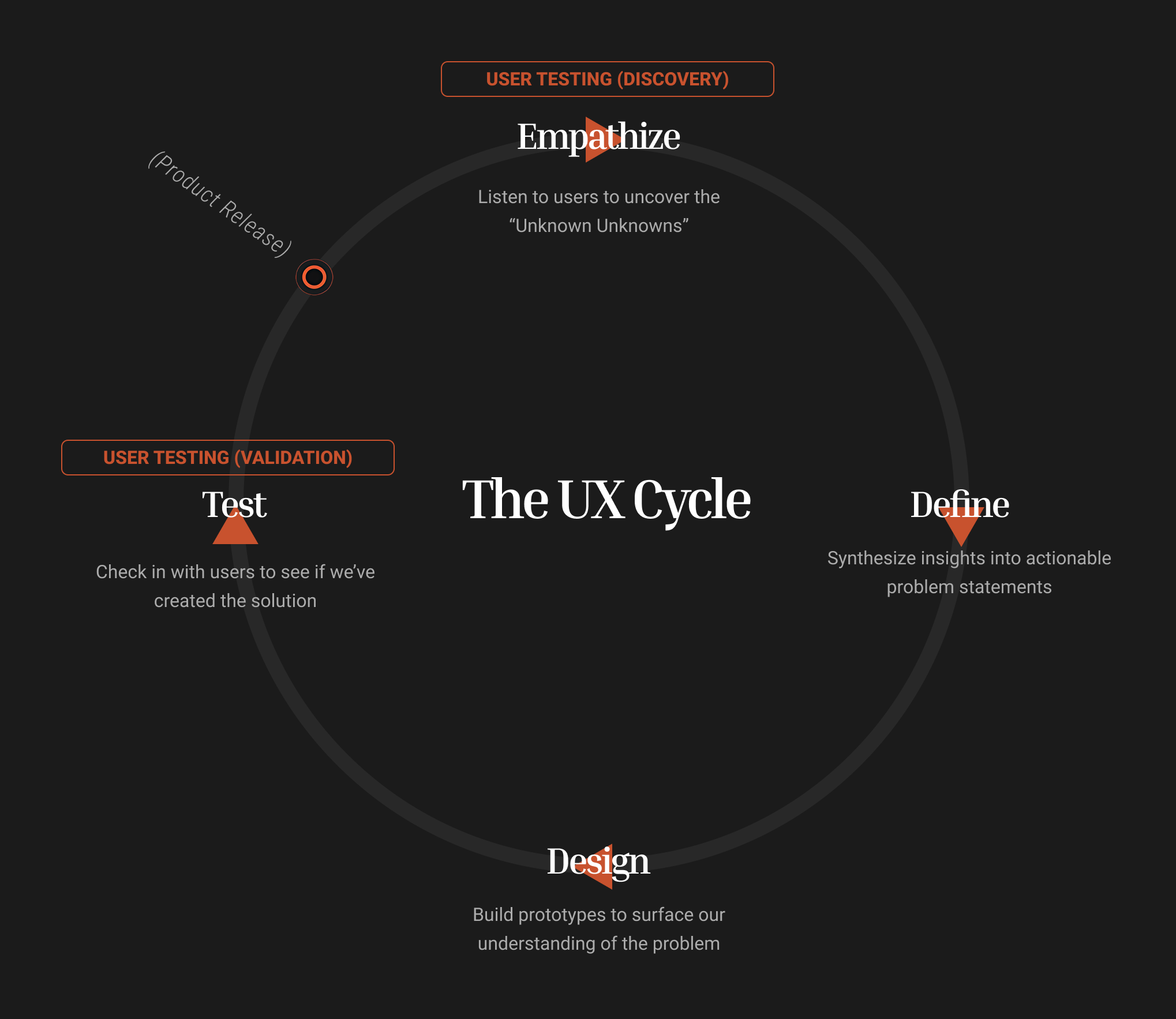
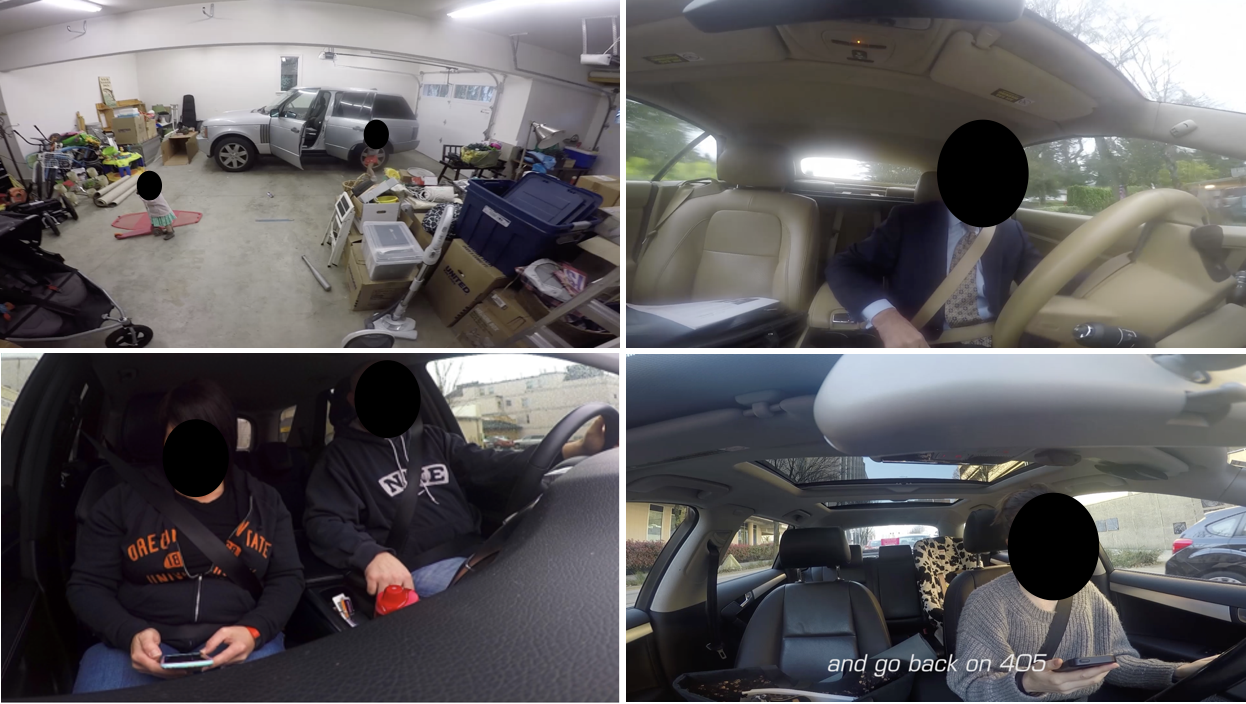
— Steve Jobs, 1997The foundation of the design cycle. We set aside our assumptions to gain deep insight into users and their lives. Understand the why behind user behavior.
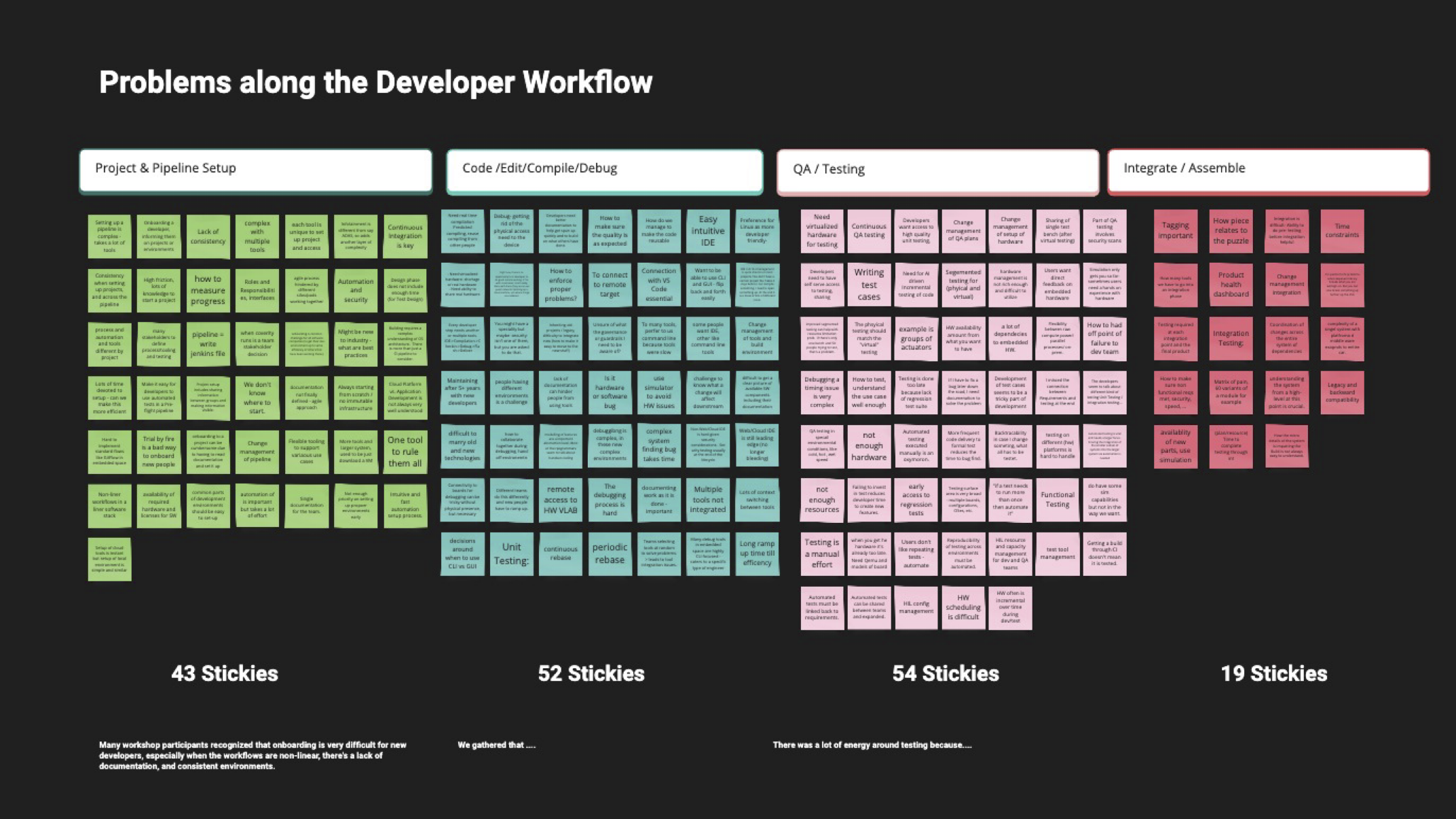
Processes: ethnographic research (interviews), contextual inquiry, longitudinal diary studies, storyboarding, journey mapping, stakeholder interviews
"If I asked customers what they wanted, they would have said 'a faster horse'."
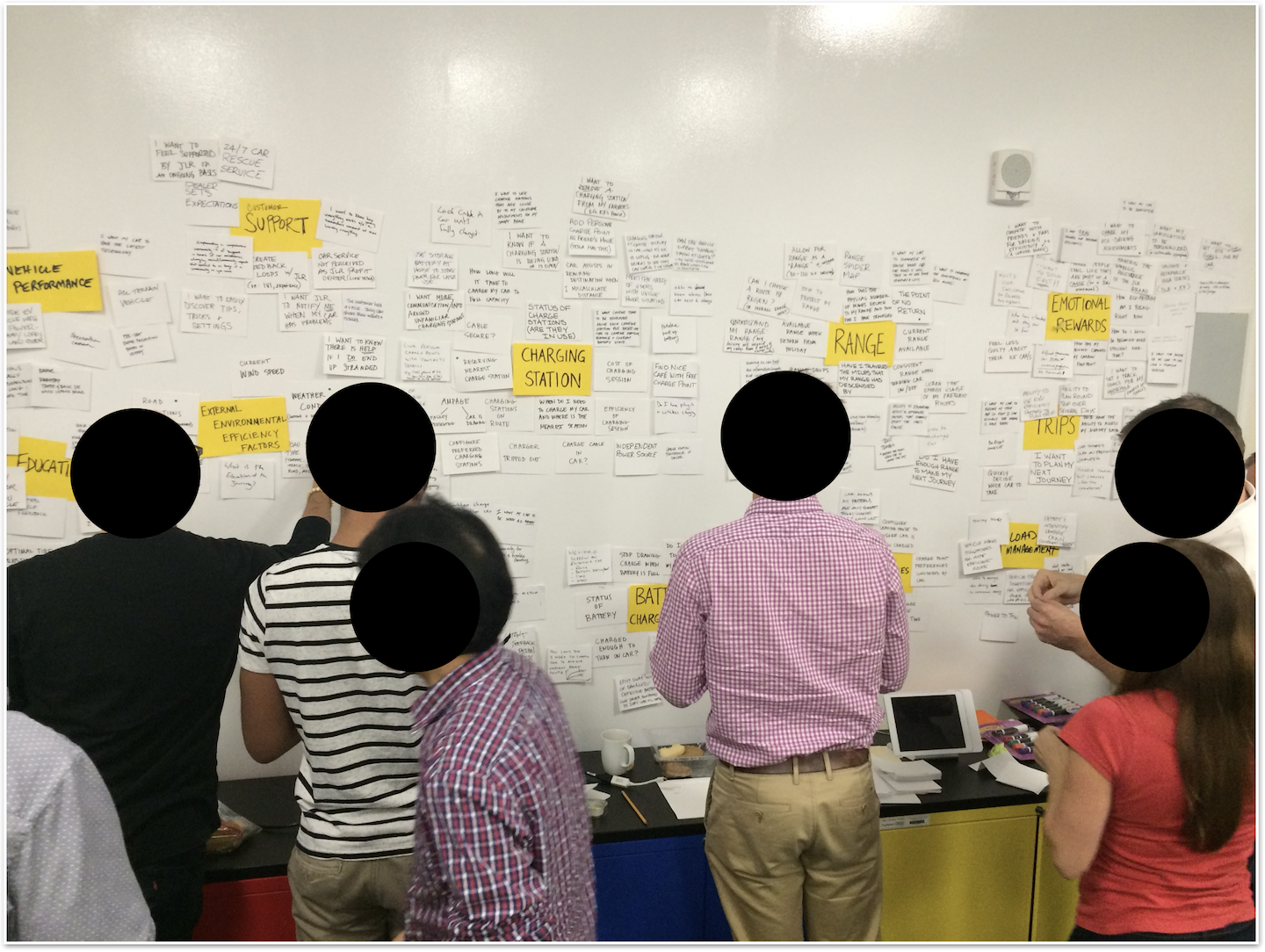
— Henry FordFrame the point of view from multiple users to paint the picture of what needs to be solved.
Processes: user stories, problem statements, personas, landscape analysis, taxonomy & schema mapping
"If I had an hour to solve a problem, I'd spend 55 minutes thinking about the problem and 5 minutes thinking about solutions."
— EinsteinMany organizations jump straight here — skipping Empathize and Define entirely. They design for business directives and PM backlogs, not for users. That's how you ship features nobody asked for.
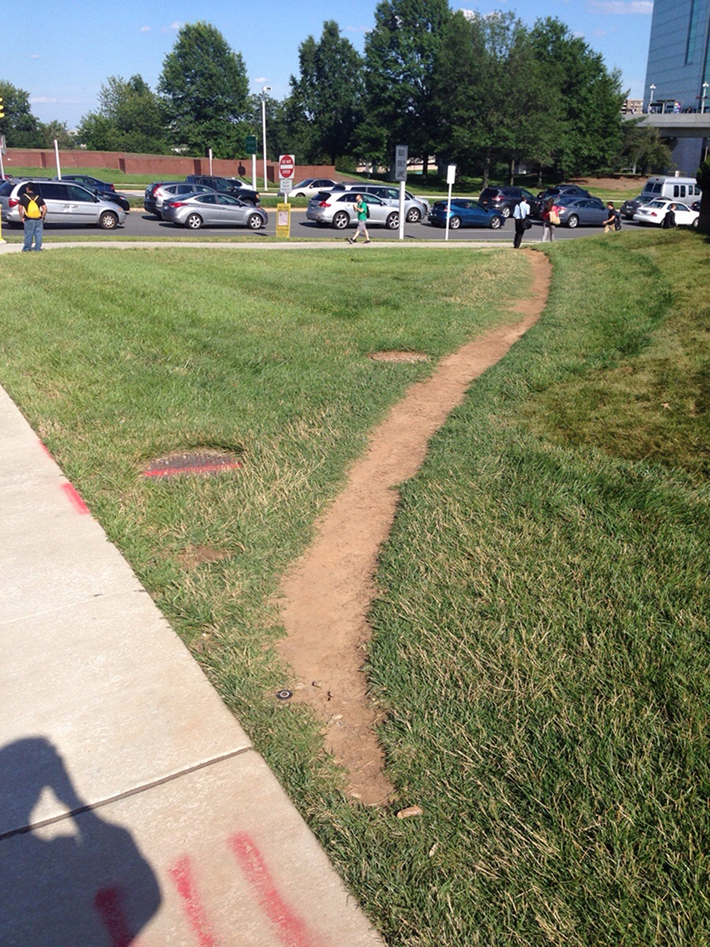
The real purpose of this phase isn't to find the solution. It's to build material that helps us discuss the problem. A rough prototype surfaces assumptions we didn't know we had. It forces conversations that no spec document ever could.
Processes: sketching, mind-mapping, "worst possible idea", Wizard of Oz prototypes, heuristic evaluation, cognitive walkthrough
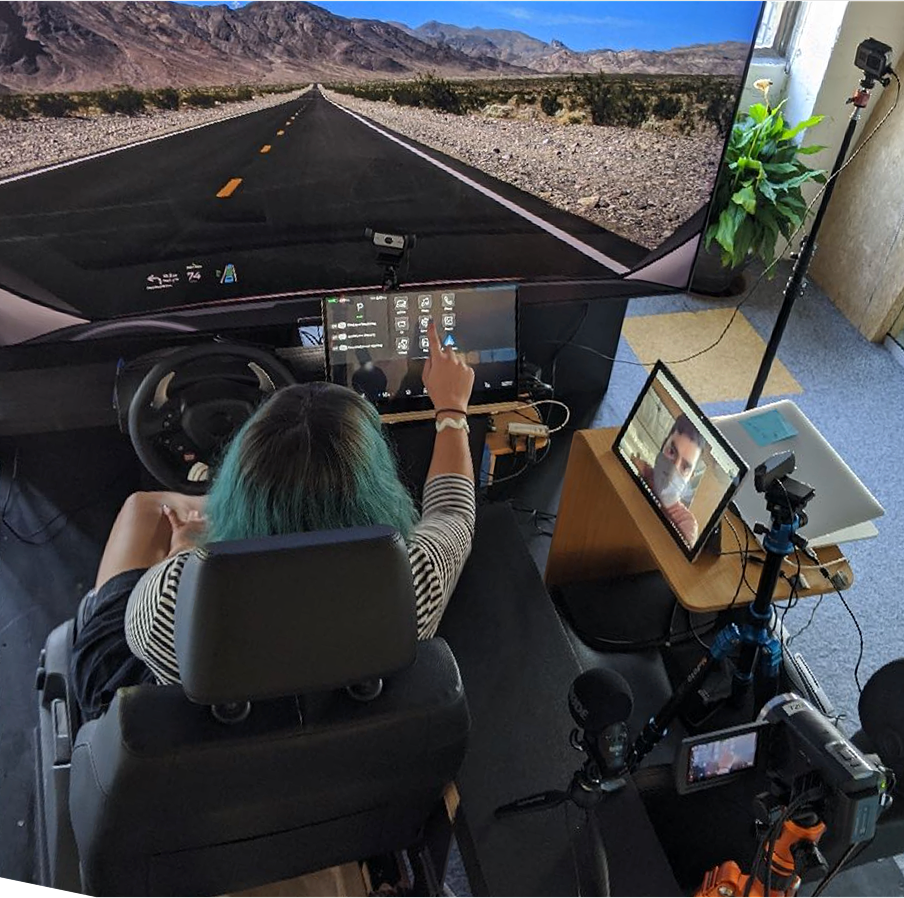
The goal of most testing should not be to validate that the product is 'useable'. Most testing should be spent validating that we are solving the right problems. Without knowing the problem we are solving, we cannot make a product that improves people's lives.
There's a difference between a product that is 'useable' (i.e. the tasks given were completed), and a product that addresses the user's most critical needs.
Processes: think-aloud protocol, problem-validation interviews, assumption mapping, card sorting, sacrificial concept testing, usability testing, A/B testing, occlusion testing
Political realities often get in the way of the research and design cycle. When business directives and tight release timelines put constraints on what must be delivered, research is often the first thing to go.
Great political capital must be spent to change this process and change is often slower than we want. In the meantime we can: